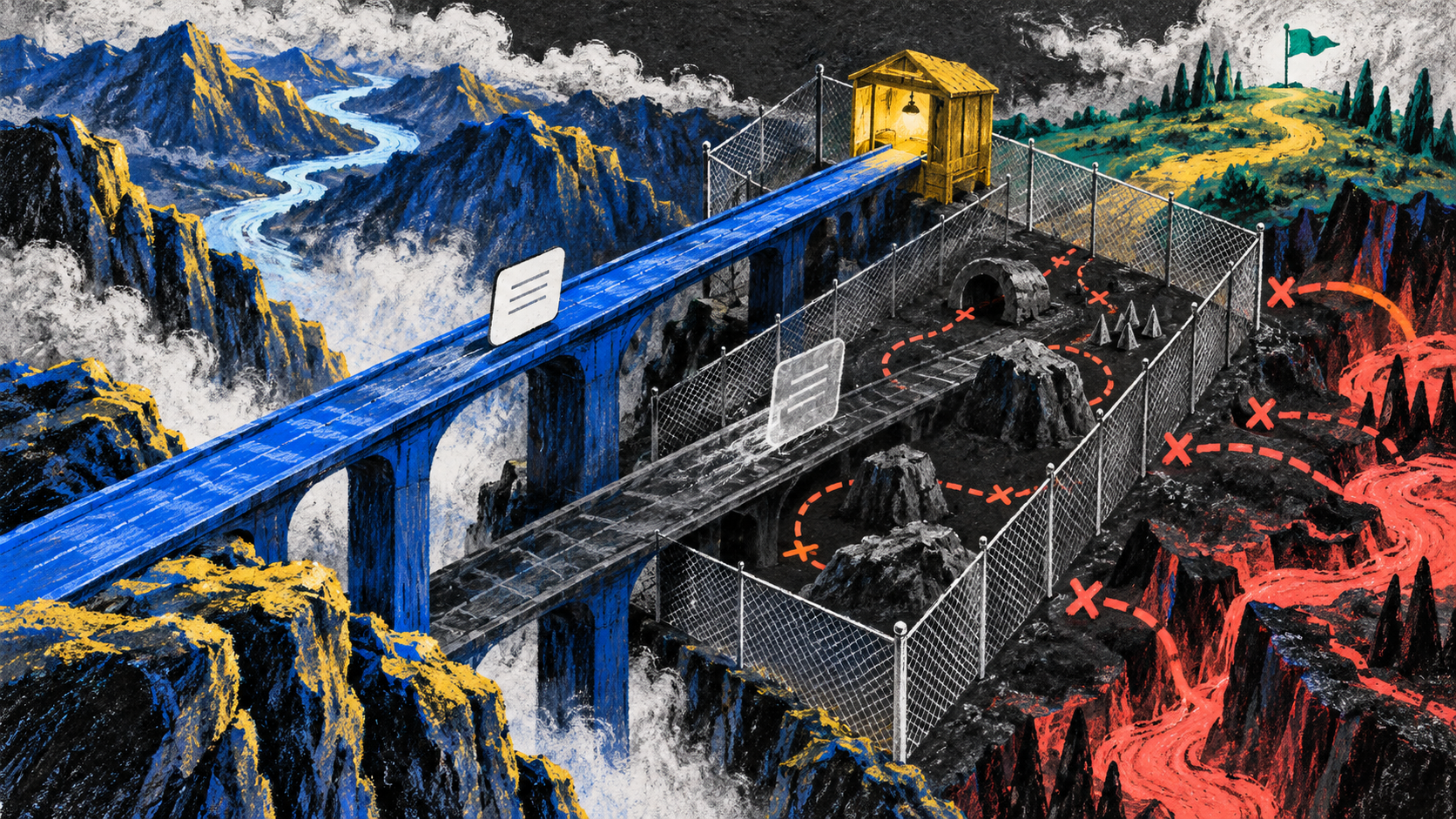
The US automated-vehicle strategy still lacks a minimum driving test
Automated vehicles already carry paying passengers in several US cities. Regulators can exempt a purpose-built robotaxi from safety rules written for steering wheels and human controls. Yet the United States still has no federal minimum performance standard for the most basic question: how well must an automated driving system drive before it operates on public roads?
The Department of Transportation's new National Strategy for Automated Vehicles, published September 3, is unusually direct about the unfinished work. NHTSA is preparing an advance notice of proposed rulemaking for objective standards of automated driving system competency. That notice would start a rulemaking conversation. It is not a finished test or a binding threshold.
Deployment continues under existing federal authority, state traffic law, company testing, crash reports, defect investigations, recalls, and individual exemptions. Each is a real form of oversight. Together, they still do not produce a shared driving exam.
Four goals, but no common performance floor
The strategy covers fiscal years 2026 to 2030 and has four goals: safety, regulatory certainty, American innovation, and interoperable corridors. Its program list stretches across passenger vehicles, commercial trucks, rural demonstrations, automated transit, emergency response, hazardous materials, digital road rules, and international standards.
Some vehicle rules plainly need revision. Federal Motor Vehicle Safety Standards include requirements built around a human driver. Controls and displays intended for that person may serve no purpose in a vehicle designed without a driving position. Updating standards for occupant protection, brakes, visibility, and other equipment is a separate task from deciding whether the automated driver can safely perform the driving task.
The strategy says NHTSA is pursuing both. It lists proposals to modernize vehicle standards, then separately identifies the future rulemaking on automated-driving competency. Equipment rules are being revised and exemptions are being granted while the common performance floor for the driver remains under development.
That does not mean developers send untested vehicles onto roads. NHTSA's automated vehicle safety page says companies test the vehicles they build. Developers also confine systems to an operational design domain, such as certain roads, speeds, weather, or service areas. What is missing is a public federal baseline showing which capabilities were tested, in which conditions, and what counted as a pass.
An exemption is not a national driving certificate
On July 31, 2026, NHTSA granted Zoox an exemption from eight Federal Motor Vehicle Safety Standards for its purpose-built robotaxi. The Federal Register notice explains that compliance with those rules would prevent the company from selling a vehicle with no conventional manual controls. NHTSA found the exemption was in the public interest and consistent with the Safety Act's objectives. It applies through July 31, 2028, subject to terms and conditions.
The decision asks whether a vehicle without a human driver's position can satisfy the safety purpose of rules written for one. It is not a general certification that the automated system drives better than a person, or that it passed a national test for automated driving. That test does not exist yet.
The distinction matters because the US vehicle regime relies heavily on manufacturer self-certification. DOT's strategy also says it wants international frameworks to recognize that model. Self-certification is easier for the public to understand when a rule sets a measurable target and regulators can test compliance. The picture is less clear when the central behavior standard is still being designed.
Crash reports look backward
NHTSA has an important source of operational evidence. Its Standing General Order on crash reporting requires named manufacturers and operators to report certain crashes involving automated driving systems and Level 2 driver assistance. For automated systems, the order covers incidents in which the system was in use within 30 seconds of a crash that caused specified injury or property damage. Reports on severe crashes are due within five days. Less severe qualifying crashes are reported monthly.
The agency publishes incident data and uses it to look for potential defects. It has also enforced the reporting duty. In 2024, NHTSA entered a consent order after Cruise failed to fully disclose details of a pedestrian crash.
These reports work as an alarm, not a leaderboard. NHTSA warns about duplicate reports, missing information, corrected classifications, and unequal driving exposure. A fleet that travels more miles has more chances to appear in the data. Raw crash totals cannot establish which system is safest.
Reporting begins after a vehicle has operated. Defect investigations and recalls can remove or repair unsafe systems. A minimum competency standard asks the question earlier: has the automated driver demonstrated an acceptable ability to perceive, predict, plan, respond to unusual road users, and reach a safe state when it cannot continue?
Those categories are our editorial proposal, not a summary of a finished NHTSA standard. The rulemaking process has to turn capabilities into testable requirements while accounting for different operating domains. A low-speed shuttle and an interstate truck do not perform the same job.
Ask for the evidence packet before the federal test exists
Federal performance rules take time. Cities, transit agencies, campuses, and fleet buyers do not have to choose between a blanket ban and blind trust. Before they approve or purchase a service, they can ask for a compact evidence packet:
- Define the operational design domain, including supported roads, speeds, weather, lighting, and construction conditions.
- List the pre-deployment scenarios, pass criteria, and cases the system failed.
- Explain software updates, regression testing, remote assistance, and emergency response.
- Normalize operational data by distance and service time, and define interventions and crashes.
- Set a stop-work threshold for repeated incidents or operation outside the approved domain.
The strategy says forthcoming voluntary guidance will cover remote operations, software updates, emergency responders, and safety management systems. Projects for machine-readable traffic rules and cross-state corridors could reduce ambiguity for automated systems. A local buyer still should not treat future guidance as evidence about a vehicle operating today.
Workforce transition receives only a short passage in the strategy, even though automated freight and transit can change who works and what jobs remain. BLOGish's recent analysis of AI and Korea's youth career ladder contains a useful warning. Removing routine work without rebuilding the route to experience can produce a delayed skills problem. Vehicle policy needs a fuller account of drivers, remote operators, maintainers, first responders, and accessibility workers.
Teams can compare models used for simulation, incident triage, or fleet support through api.ish.chat, while ish.chat makes differences in model explanations easier to inspect. Keep those tests separate from a vehicle's legal safety case. A language model's analysis cannot replace evidence that an automated driving system performs safely on the road.
The strategy lists substantial work, but objective ADS competency standards remain unfinished. Until a common test exists, a public-road deployment should identify which evidence stands in for it, who checked that evidence, and what happens when the vehicle leaves the case its developer presented.